The rise of Reform UK: Will Nigel Farage 'annihilate' the Conservatives?
| Updated:
Reform UK became the second most-popular political party in the UK in June, overtaking the Conservatives in a YouGov poll. But what does Nigel Farage's popularity mean for his right-wing rivals?

Listen to this article
In Brief...
- Reform UK, led by Nigel Farage, has surpassed the Conservatives in popularity, becoming the second most popular party in the UK according to a YouGov poll.
- Critics and supporters debate the party's potential impact, with some predicting it could significantly disrupt the traditional political landscape, although major seat gains in the upcoming election are unlikely.
- Reform UK's platform focuses on strict immigration policies, NHS reforms, and challenging current UK-EU relations, drawing parallels to the rise of right-wing parties in Europe.
"We won't have seen anything like this in Britain since the Ice Age - a near extinction level event." 🥶
— The News Agents (@TheNewsAgents) June 16, 2024
The latest polls say if the election was today, the Conservatives wouldn't just lose badly, they'd be decimated.@maitlis | @jonsopel | @lewis_goodall pic.twitter.com/7Op0m9rN3t
What's been happening with Reform UK?
The 13th of June. That's the day Reform UK overtook the Conservatives to become the second most popular political party in the UK, according to a YouGov poll.
"This is the inflection point," said leader Nigel Farage after the poll results were revealed.
"The only wasted vote now, is a Conservative vote. We are the challengers to Labour, and we're on our way."
Reform UK, and their supporters, had seen the party's popularity grow in the weeks after Rishi Sunak announced the July General Election, slowly creeping up the polls after Farage took over leadership from Richard Tice.
Former Conservative MP and cabinet minister Nadine Dorries recently told The News Agents she believed there was a "strong possibility" that the 2024 General Election could see the "annihilation of the Conservative Party” due to the rise of Reform.
"It is probably going to disappear," she added.
"And certainly, Reform will take over, because given tactical voting – which is taking place already in many constituencies – and given the uprising in Reform's vote and support at the moment since Nigel Farage decided he would stand as leader, I think you could see the disappearance of the Conservative Party."
That's unlikely to happen with any immediacy. After Nigel Farage's highly publicised visit to Clacton to announce his candidacy in the seaside town, even the most optimistic YouGov prediction was that the party might take four seats in the July election.
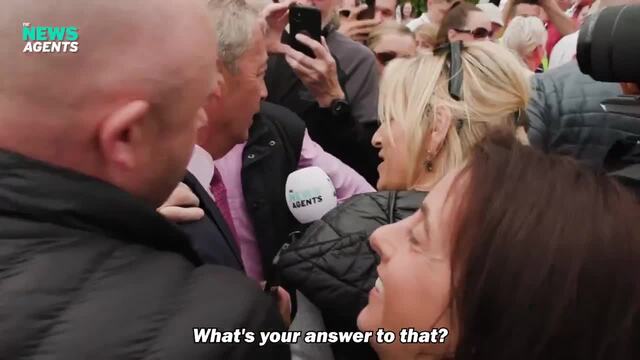
Emily Maitlis confronts Nigel Farage in Clacton
Where did Reform UK come from?
Reform has two key players - Nigel Farage and Richard Tice. Tice is a multi-millionaire property businessman with longstanding financial ties to UK politics, having previously been a donor to the Conservatives. He also founded two separate pro-Brexit groups, Leave.EU and Leave Means Leave, aiding in the successful campaign for the UK to cut ties with the European Union in 2016.
Farage was leader of the right-wing populist UKIP party in the early 2010s, and returned to frontline politics as leader of the Brexit party in 2019, whilst Brexit negotiations were taking a very, very long time.
By 2020, once Britain had left the EU, the Brexit Party rebranded as Reform UK. In 2021, Tice took over as leader of the party, but after the general election was called in June this year he stepped into the role of chairman, paving the way for Farage to lead the party once again. Reform have so far not won any parliamentary elections, but Conservative MP Lee Andersoon defected to Reform in March 2024, and so became the party’s first sitting MP.
In May 2024, the Guardian reported that 80% of Reform’s funding came from Richard Tice, who has given the party £1.4m in funding and loans since 2021.
What does Reform UK stand for?
Like all other UK political parties, Reform is making promises to sort NHS waiting lists, reform social housing and increase the number of police on UK streets.
But it is perhaps most dedicated to making a change in the UK's relationship to Europe, and how this country deals with migrants. Reform UK wants no illegal immigrants resettled in the UK, all asylum seekers to be detained and "processed rapidly offshore", immediate deportation of all foreign criminals, and an end to what it calls "the illegal working scandal", claiming local wages have gone down due to "cheap, undocumented labour".
Reform would also cancel the UK's membership of the World Health Organisation, reject the influence of the World Economic Forum, leave the European Convention on Human Rights, and replace the 2010 Equalities Act, claiming it has "led to exclusion for some in majority groups".
In addition, it would stop pro-Palestine marches, calling them "violent, hate demonstrations", and introduce a Free Speech Bill to stop "left-wing bias and 'woke ideology'".

The rise of right-wing politics in Europe
Looking at politics in Europe and beyond, some question whether there are trends that may reflect the direction UK politics is heading in.
It took just 10 years (and a few name changes and rebrands) for Italy's nationalist, right-wing Brothers of Italy party to go from formation to taking power, with leader Georgia Meloni becoming Prime Minister in 2022.
Farage spoke highly of Giorgia Meloni, praising her "wit" when Italy passed a Rwanda-style law to deport asylum seekers to Albania, and even described her as "his new pinup" in 2023 during an appearance at right-wing US conference, CPAC.
Just weeks after Sunak called a snap general election in the UK, president Emmanuel Macron did the same in France. The move came after he received heavy defeat in the European Parliament elections by Marine Le Pen’s populist right-wing National Rally. The party, known as the National Front until 2018, has intentionally softened after facing accusations of racism and antisemitism. However they are still largely seen as far-right and remain deeply anti-immigration.
Calling the election, Macron said; “I do not want to give the keys to power to the far right in [the presidential election of] 2027, so I fully accept having triggered a movement to provide clarification.”
Back in 2017, Farage endorsed Le Pen to win the French presidential election, claiming that her victory would be good for the UK.
Outside of Europe, the world has seen the rise and fall (and potential rise again) of Donald Trump. Farage has history with Trump, he was the first UK politician to meet the President after his 2016 win. He’s remained a staunch supporter since, originally ruling out a comeback to UK politics as his plan was to “help with the grassroots campaign” to get Trump elected in the US.
And what’s more, the Reform slogan is ‘Let’s make Britain great’ - which of course, is very similar to Trump’s popular ‘MAGA’ slogan, ‘Make America Great Again’.

What can we expect at this summer’s General Election?
Can Reform UK really unsettle the UK’s political landscape? Could success in the summer election really spell “annihilation” for the Conservatives?
Farage admitted he thinks that Labour will inevitably win this year’s election, but has said Reform’s aim is to be the “voice of opposition”, taking over the Conservative’s to be Labour’s main opponent when the 2029 election comes around.
Polling suggests Reform UK will be a major disruptor in July’s election, but also predicts only minor tangible victories when it comes to securing seats. Sweeping gains, as made by right-wing parties in France and Italy, seems unlikely – for now.
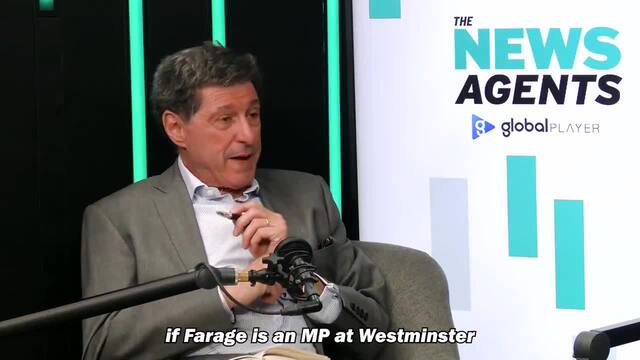
“The Conservative’s job just got a 𝙝𝙚𝙡𝙡 of a lot harder.” Farage announces leadership of Reform.
What have the News Agents said?
No one knows if Reform UK's seemingly growing popularity will see them "annihilate" the Conservatives until after 4 July. But when it comes to Nigel Farage taking the Clacton seat, The News Agents have already made their predictions.
"My gut feeling is, he wouldn't have stood here, he would not have risked another loss – it would have been his eighth in a row – if he hadn't believed he was going to win," said Emily Maitlis.
"I would say there's a slight chance that, if the Conservative vote held up and the Reform vote brought people out who weren't going to vote before, then you might find the vote was split and Labour would come through the middle.
"What I think will happen is the Conservative vote will shrink into the Reform vote, and more people will come out for Farage than would have come out for the Conservatives and they will beat Labour here. I'm going to say it will be a slam dunk."
Listen to the latest episode of The News Agents podcast now.