Trump’s DEI crackdown: 'Business needs to mirror the respect we want in society'
| Updated:

Donald Trump has taken swift action against DEI policies in the US government workforce, and is now targeting universities, but why have so many big companies been so quick to follow his lead?
Listen to this article
Read time: 4 mins
In brief…
- In the weeks following Donald Trump’s scrapping of diversity, equity and inclusion schemes in government, a number of big-name companies have also ditched their DEI commitments.
- Alexandra Mousavizadeh, co-founder and CEO of Evident, tells The News Agents that companies wanting to work with Trump’s administration may have done this to avoid losing business, while others may consider DEI to be ‘baked in’ to its ethos already.
- She believes the business landscape will shift to one that is visibly more white and male, while Trump remains in power.
What’s the story?
Ending DEI schemes was one of Donald Trump's first actions after his inauguration.
Not lowering the price of eggs or addressing illegal immigrants, but making sure that government bodies scrapped all schemes aiming to employ a diverse workforce, where people felt valued and included and that their opinions and experience mattered. Trump believes these schemes target and disadvantage white men.
More recently, he has extended this change to US universities, warning that they face having funding cut if they don't follow suit.
In January 2025 he suggested DEI policies could have been to blame for the air tragedy which claimed the lives of 67 people when a helicopter collided with a plane over Washington DC.
This has been mirrored across the private sector as well, with Meta, Amazon, Google, McDonald’s, Goldman Sachs, and Deloitte among the big-name businesses to scale back goals for a diverse workforce.
In the UK, Tory leader Kemi Badenoch has criticised DEI in the workplace, saying the practice – along with respect for pronouns and climate activism – “are about control”, in a recent speech attacking the “poison of leftwing progressivism” at a right-wing conference in London this week.
So what does the future hold for diversity in the workplace, why does it matter, and why have so many big companies followed suit and ditched all their DEI policies?
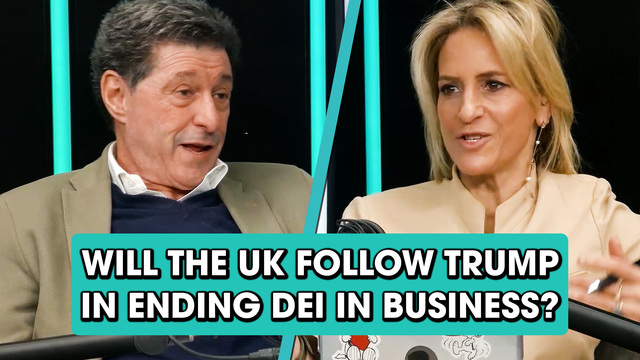
Will the UK follow Donald Trump in ending DEI in business?
What is DEI?
If you listen to Donald Trump and Elon Musk, you might believe DEI is dropping gay, black, disabled women into top jobs, regardless of their skills and experience.
This is not the case.
DEI stands for diversity, equity and inclusion, and is a framework within businesses that ensures people from minority backgrounds are treated equally and fairly, and have the same job opportunities as their straight, white, able-bodied male colleagues.
Diversity relates to the protected characteristics of employees, equity to bringing people from historically disadvantaged groups into positions of influence, while the inclusion part is about integration and creating a culture where all voices are heard and respected.

What does the data show?
Research has shown that women-led businesses make more money and are more successful than male-owned firms, and companies are more productive under female leadership.
So it makes little sense to scrap measures that could stop businesses tapping into this female-driven route to success.
"It's interesting to see this backlash, because is there a fundamental belief that this is not true?" Alexandra Mousavizadeh, co-founder and CEO of Evident, asks The News Agents, as she questions why so many big businesses have taken the opportunity, in the first few months of 2025, to walk away from previous DEI commitments.
"I actually thought it was so embedded in the way that we think, and about how we behave, as a business, because we want to mirror what we want society to be doing in terms of respect, diversity and inclusion of everyone," Mousavizadeh tells Emily Maitlis and Jon Sopel.
"So it could have been assumed that all businesses had it baked in. But when you see Trump's statement and the reaction to it, that's obviously not so."
She believes there are two reasons for any company to abandon its commitments to equality and diversity in its workforce.
"If you're working closely with the US and getting anything from the government, it does make a lot of business sense," she says.
"If you're going to be blacklisted for having DEI explicitly on your website, then you lose those contracts for the next four years, it's going to be bad for business.
"That is a cynical view to take, but some that are abandoning it explicitly would say that DEI is so embedded in the way they hire anyway, it's baked into the core of the company."

What's the alternative?
It has been suggested that workplaces would benefit from a switch from DEI to MEI (meritocracy, excellence and intelligence), with claims this would also result in a diversity and inclusive business culture.
Mousavizadeh doesn't believe this is the case.
"That sounds wonderful in principle, but I think that if you only focus on meritocracy, meritocracy is subjective, and the pool that you're picking from is not necessarily diverse to begin with," she says.
"So while I understand that is a nice idea, I don't think actually you will achieve DEI from that approach."
Is the future of big business white and male?
Mousavizadeh believes there will be a visible decline of diversity in the corporate world for the foreseeable future – at least while Trump is in The White House.
"If it's not embedded in the business, and in the foundations when you put out job descriptions, it's actually an abandonment of these principles," she says.
"In the hiring process, there will be much less consideration about pulling people into interviews that represent society.
"So yes, we will move towards a more white male pool of employment, and it will disadvantage people from different backgrounds and women."
This, she adds, will continue, until "the pendulum swings back".
Listen to the latest episode of The News Agents